Most blogs about morels talk about cooking them. Chefs love them, food critics praise them, and restaurants charge a premium for them. But growers see something completely different.
At MushroomGroov, we’re interested in what happens before the plate — the cultivation process behind Australian Black Morel Mushrooms. For mushroom cultivators, these fungi are not just a gourmet ingredient. They’re one of the most fascinating challenges in the world of mushroom growing.
Morels are rare, complex, and a little mysterious. And that’s exactly why growers are so drawn to them.
Why Australian Black Morel Mushrooms Are Different From Typical Mushrooms
If you’ve grown mushrooms like oyster, shiitake, or lion’s mane, you already know the basic process. You inoculate a substrate, wait for the mycelium to colonize, and under the right conditions the mushrooms begin to fruit.
Morels don’t always follow that script.
Australian Black Morel Mushrooms behave differently from many common cultivated species. In nature, they appear when environmental triggers align — things like temperature shifts, soil composition, and seasonal moisture levels.
That unpredictability is what makes them so intriguing for cultivators. Instead of simply following a formula, growers often experiment and observe how the fungus responds to its environment.
For many mushroom enthusiasts, morel cultivation becomes less like farming and more like studying fungal ecology.
Why Growers Are Interested in Australian Black Morel Mushrooms
From a grower’s perspective, morels represent something special. They combine rarity, scientific curiosity, and high culinary value.
Many cultivators begin their journey with beginner-friendly mushrooms like oyster mushrooms. Those species are great for learning the basics of mycology and cultivation.
But eventually, curious growers want to explore something more complex.
That’s where Australian Black Morel Mushrooms enter the picture.
Because they require a deeper understanding of environmental triggers and mycelial behavior, they push growers to expand their skills. Experimenting with morels often teaches cultivators more about fungi than almost any other species.
Everything Starts With the Mycelium
Before a single mushroom appears, the most important stage of cultivation happens underground — within the mycelium.
Mycelium is the vegetative network of the fungus. It spreads through substrate or soil, absorbing nutrients and building the foundation for future mushroom growth.
At MushroomGroov, we focus heavily on providing reliable liquid culture and grain spawn because this early stage determines how strong the fungal network becomes.
For growers working with Australian Black Morel Mushrooms, establishing a healthy mycelial network is critical. Once the mycelium is strong and well-developed, growers can begin experimenting with environmental conditions that may encourage fruiting.
Think of it like building the root system of a plant before expecting it to produce flowers.
Why Liquid Culture Makes Cultivation Easier
Liquid culture has become one of the most valuable tools for modern mushroom growers.
Instead of starting from spores, which can introduce genetic variability and contamination risks, liquid culture allows cultivators to expand a clean and stable strain quickly.
For species like Australian Black Morel Mushrooms, this consistency matters a lot. A strong liquid culture helps ensure faster colonization and healthier mycelial growth once it’s transferred to grain.
Many growers also appreciate how efficiently liquid culture can be expanded. With the right sterile technique, a small culture can inoculate multiple jars or bags of grain spawn.
That efficiency saves both time and resources during cultivation.
The Role of Grain Spawn in Morel Cultivation
Once liquid culture has been expanded, the next step is typically grain spawn.
Grain acts as a nutrient-rich medium that allows the mycelium to spread rapidly. As the fungus colonizes the grain, it creates thousands of inoculation points that can later be transferred into larger growing environments.
For growers experimenting with Australian Black Morel Mushrooms, grain spawn often becomes the bridge between laboratory culture and outdoor or soil-based growing setups.
Healthy grain spawn gives the mycelium a strong foothold before it encounters more complex environmental conditions.
In simple terms, the stronger the spawn, the better the chances of successful cultivation later.
A Small Grower’s Experiment
One of our customers at MushroomGroov once shared a story that perfectly captures the patience involved in growing morels.
He started with Australian Black Morel Mushrooms liquid culture and expanded it into several jars of grain spawn. After full colonization, he prepared a small outdoor bed behind his greenhouse using soil, wood chips, and organic material.
Then he waited.
For weeks, nothing happened. No visible signs of mushrooms.
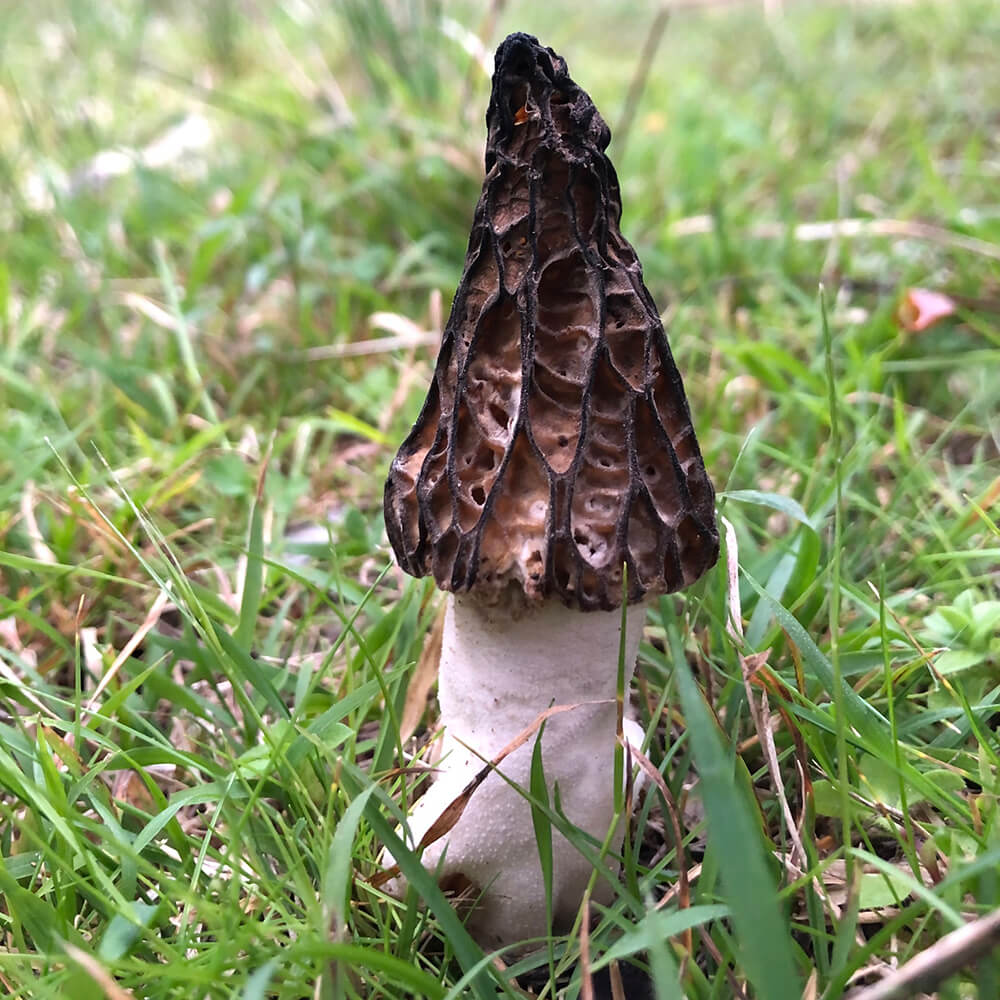
But early in spring, after a sudden temperature drop followed by rainfall, he noticed something unusual. Small honeycomb-shaped caps were pushing through the soil.
His message to us later was simple:
“Worth every bit of patience.”
That’s the kind of moment that keeps growers fascinated with morels.
Why Morels Continue to Fascinate the Cultivation Community
Morel mushrooms have been studied for decades, yet they still hold many secrets. Researchers continue exploring the environmental signals that trigger fruiting, while growers experiment with soil conditions, temperature cycles, and moisture patterns.
For cultivators who enjoy learning and experimenting, Australian Black Morel Mushrooms represent a rewarding challenge.
They remind growers that fungi are complex living systems, not just crops.
Every experiment, successful or not, teaches something new about how these organisms interact with their environment.
Tips for Growers Interested in Morel Cultivation
If you’re curious about experimenting with morels, a few principles can help guide your approach.
Start with clean genetics.
Reliable liquid culture gives your mycelium the best possible start.
Focus on strong spawn.
Healthy grain spawn creates a dense fungal network that can adapt to new environments.
Expect experimentation.
Morels often respond to environmental triggers rather than strict cultivation formulas.
Be patient.
Unlike fast-growing mushrooms, morels may take time before showing visible results.
Many experienced growers treat Australian Black Morel Mushrooms as a long-term cultivation project rather than a quick harvest crop.
The MushroomGroov Perspective
At MushroomGroov, we believe mushroom cultivation is as much about curiosity as it is about production.
Providing high-quality liquid culture and grain spawn allows growers to explore species that push their skills further. And few mushrooms spark that curiosity quite like morels.
They challenge growers to observe nature more closely and experiment with new techniques.
And when those distinctive honeycomb caps finally appear, the sense of accomplishment is hard to beat.
A Simple Takeaway for Growers
If you’re ready to explore a species that goes beyond beginner cultivation, morels are a fascinating place to start.
Begin with strong liquid culture, build healthy grain spawn, and give the mycelium time to establish itself before experimenting with fruiting conditions.
Growing Australian Black Morel Mushrooms may require patience and experimentation, but the process reveals just how remarkable the fungal world really is.
And for many cultivators, that journey is exactly what makes mushroom growing so rewarding.